New EDA Guidelines: Understanding the Framework for Products with Misuse Potential
Introduction
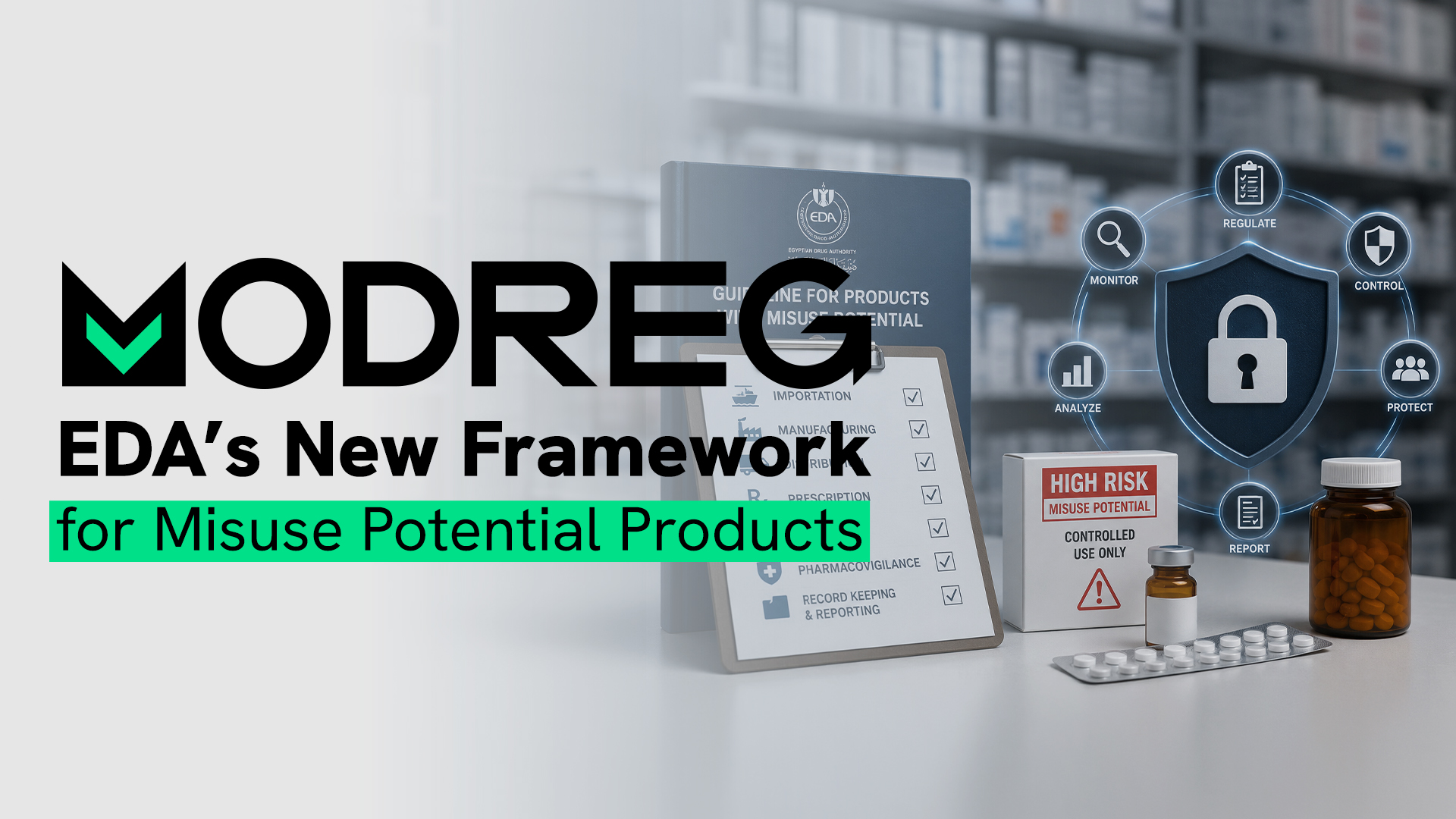
The Egyptian Drug Authority (EDA) has issued a new regulatory guideline (EDREX: GL.CIP/PPMA.002 – Version 1/2026) introducing enhanced controls for pharmaceutical products and active substances with misuse potential.
The guideline became effective on 30 June 2026 and establishes new compliance obligations for manufacturers, importers, distributors, warehouses, and pharmacies.
Why This Update Matters
The new framework represents a significant shift toward lifecycle compliance. Rather than regulating products only during registration, EDA now requires continuous monitoring and reporting throughout the supply chain, strengthening product traceability, inventory control, and patient safety.
Key Regulatory Changes
The guideline introduces enhanced controls across several operational areas:
Importation
- Annual import plans must be submitted to EDA.
- Import quantities are evaluated based on:
- Historical imports
- Market demand
- Available inventory
- Export quantities
Manufacturing
Manufacturers must:
- Submit quarterly production plans.
- Obtain EDA approval before production begins.
Distribution
- Product supply requires prior EDA approval.
- Distribution channels are subject to enhanced monitoring and reporting requirements.
Warehouses
Warehouses must:
- Maintain inventory tracking systems.
- Keep complete batch records.
- Submit weekly supply reports to EDA.
- Retain records for at least five years.
Pharmacy Dispensing
Pharmacies must ensure:
- Dispensing only against valid medical prescriptions.
- Maximum one-month supply per dispensing.
- A prescription may only be dispensed up to three times or until its validity expires.
Products Covered by the Guideline
The guideline currently applies to registered products containing the following active substances:
- Eszopiclone
- Gabapentin
- Cyclopentolate
- Tropicamide
- Clozapine
The official annex provides the complete list of registered products, trade names, strengths, and dosage forms covered under the framework.
🔗 View the Official Annex (Annex 1):
Looking Ahead
The new guideline strengthens lifecycle control for products with misuse potential by enhancing traceability, inventory oversight, and supply chain transparency. For pharmaceutical companies, it highlights the need for stronger planning, documentation, and operational coordination to ensure compliance while supporting a safer and more efficient healthcare supply chain.